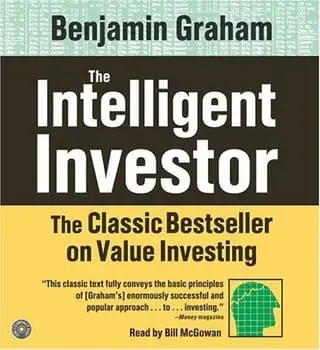
The Intelligent Investor summary
by Benjamin Graham · 1949 · 8 key ideas · 20-minute read
The classic guide to value investing: treat shares as parts of real businesses, demand a margin of safety, and let the market's moods serve you rather than rule you.
Why read it
For anyone who wants the foundations beneath almost all sensible investing advice. Warren Buffett has called it the best book on investing ever written, and its core ideas about temperament still apply.
The Intelligent Investor in brief
Graham wrote for ordinary people, not professionals, and his main subject is attitude more than technique. He begins by separating investing — careful analysis that aims for safety of principal and a satisfactory return — from speculation, which bets on price moves. Most people, he warns, speculate while believing they are investing.
He then divides investors into two types by the effort they will put in. The defensive investor wants safety and freedom from bother, and should hold a simple, diversified mix of high-grade bonds and large, sound companies, keeping the split between stocks and bonds somewhere between 25% and 75%. The enterprising investor, willing to do real work, can hunt for bargains that others overlook.
Two images carry the book. Mr. Market is a moody business partner who offers to buy or sell every day at prices driven by his emotions; the intelligent investor uses his offers when helpful and ignores them otherwise. The margin of safety — buying only when price sits well below a conservative estimate of value — is what protects you when your analysis or luck turns out wrong.
Throughout, Graham stresses discipline: diversify, beware of paying up for exciting growth stories, buy in regular amounts, and remember that the investor's greatest enemy is usually himself. The book has been revised several times; most modern editions include commentary by journalist Jason Zweig updating the examples.
The 8 key ideas
1. Investing is not speculating
Know which game you're playing before you play it.
2. Mr. Market works for you
Mr. Market is there to serve you, not to guide you.
3. Always demand a margin of safety
Leave room to be wrong.
4. Defensive or enterprising?
Earn extra returns with effort, not with risk.
5. Keep a balance of stocks and bonds
Balance stops you betting everything on a guess.
6. Sound companies at sensible prices
Quality first, then a price that doesn't assume perfection.
7. Growth isn't the same as profit
A great story at a crazy price is a bad investment.
8. Your worst enemy is you
Make your rules when calm, follow them when scared.
Read the full guide in Kinquire. Every idea with a real example, a diagram and one thing to try today, plus a quick quiz so it sticks. Free to start.
Read The Intelligent InvestorKey takeaways
- Before buying anything, label it honestly: investment or speculation.
- Treat market prices as offers from a moody partner, not verdicts on your choices.
- Only buy with a margin of safety between price and a conservative value.
- Decide whether you're a defensive or enterprising investor and act consistently.
- Keep a stock–bond balance within set limits and rebalance on a schedule.
- Automate regular investing to stop emotions from timing the market for you.
Our take
The Intelligent Investor has endured because its central ideas — Mr. Market, margin of safety, the investor-versus-speculator distinction — are about human behaviour, which hasn't changed. Its weak points are age and difficulty: the original examples, bond rules and some numerical screens reflect mid-century markets, and the text can be dense for beginners. Markets are also more efficient than in Graham's day, and late in life he himself expressed doubt that elaborate analysis could still reliably find bargains, while speaking warmly of simple, broad approaches. Zweig's commentary in modern editions helps a lot.
About Benjamin Graham
Benjamin Graham was an investor and Columbia Business School teacher whose students included Warren Buffett. He also co-wrote the textbook Security Analysis (1934) with David Dodd.
If you liked this
- A Random Walk Down Wall Street by Burton G. Malkiel
- The Little Book of Common Sense Investing by John C. Bogle
- One Up on Wall Street by Peter Lynch
- The Psychology of Money by Morgan Housel
- Rich Dad Poor Dad by Robert T. Kiyosaki
- I Will Teach You to Be Rich by Ramit Sethi