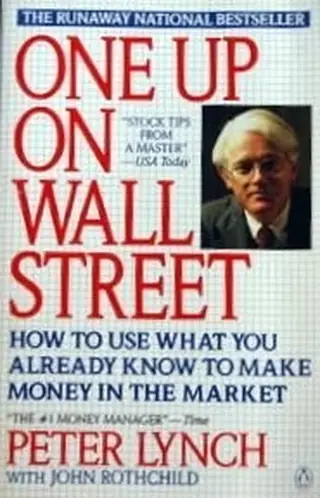
One Up on Wall Street summary
by Peter Lynch · 1989 · 8 key ideas · 20-minute read
Ordinary investors can find great stocks by noticing good businesses in everyday life — then doing the homework to understand them and holding patiently while the story plays out.
Why read it
For anyone who wants to pick individual stocks sensibly. One of the most successful fund managers ever explains, with humour and plenty of real cases, how amateurs can use what they already know.
One Up on Wall Street in brief
Lynch's core message is optimistic: amateur investors have real advantages over professionals. They can spot promising companies early in their jobs, neighbourhoods and shopping trips, long before Wall Street analysts take notice. Professionals, by contrast, are constrained by rules, committees and the fear of owning anything unusual.
But noticing a good product is only the start. Lynch insists you must research the company — its earnings, balance sheet and prospects — and be able to explain in a couple of minutes why you own it. He sorts companies into six categories, from slow growers to turnarounds, each with different expectations and different signals for buying or selling.
He describes the traits of a 'perfect' stock: often a boring company in a dull industry, overlooked by institutions, with a niche and growing earnings. He warns against hot stocks in hot industries, companies that waste profits on unrelated acquisitions, and stories with no earnings behind them. In the long run, he argues, share prices follow earnings.
Finally, Lynch advises against trying to predict the economy or the market. Instead, own companies you understand, keep checking whether their story still holds, add to winners rather than cutting them early, and be patient — big gains often take years.
The 8 key ideas
1. Your everyday edge
Notice first — but never buy without homework.
2. The two-minute drill
If you can't explain it, you don't own it — you're gambling.
3. Know which kind of company you own
Different companies, different expectations.
4. Boring can be beautiful
Dull business, ignored stock, growing profits.
5. Beware diworseification
Stick to what you know — and so should the company.
6. Prices follow earnings
Follow the earnings, not the excitement.
7. Let your winners run
Don't pull the flowers and water the weeds.
8. Ignore the forecasts
Study companies, not forecasts.
Read the full guide in Kinquire. Every idea with a real example, a diagram and one thing to try today, plus a quick quiz so it sticks. Free to start.
Read One Up on Wall StreetKey takeaways
- Use daily life to spot promising businesses — then research them properly.
- Write a two-minute story for every stock you own and recheck it regularly.
- Classify each holding in Lynch's six categories and set expectations accordingly.
- Compare P/E with earnings growth before buying.
- Let winners with intact stories run; don't hold losers out of hope.
- Ignore market forecasts and focus on company results.
Our take
One Up on Wall Street is lively, practical and full of hard-won rules of thumb from a manager with an exceptional record. Its categories, two-minute drill and warnings about hot stocks and diworseification remain useful. But it can make stock-picking sound easier than it is. 'Buy what you know' is often misread as a shortcut, and evidence since suggests most individual stock pickers trail index funds after costs. Lynch had a team, deep research and decades of experience; ordinary readers don't. The examples are from the 1970s and 80s. Read it to understand businesses, but be honest about how much time you'll commit.
About Peter Lynch
Peter Lynch managed Fidelity's Magellan Fund from 1977 to 1990, building one of the best long-term records of any mutual fund manager. He wrote the book with journalist John Rothchild.
If you liked this
- The Intelligent Investor by Benjamin Graham
- A Random Walk Down Wall Street by Burton G. Malkiel
- The Psychology of Money by Morgan Housel
- Rich Dad Poor Dad by Robert T. Kiyosaki
- I Will Teach You to Be Rich by Ramit Sethi
- The Millionaire Next Door by Thomas J. Stanley and William D. Danko