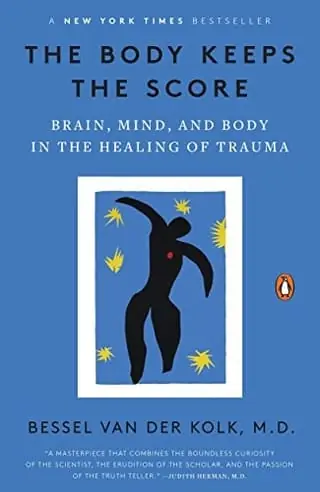
The Body Keeps the Score summary
by Bessel van der Kolk · 2014 · 8 key ideas · 20-minute read
Trauma isn't just a bad memory; it reshapes the brain and body so that the past keeps happening in the present, and healing has to involve the body as well as the mind.
Why read it
For anyone who wants to understand trauma, in themselves or people they care about, and why talking alone isn't always enough. It's a guide to understanding, not a substitute for professional help.
The Body Keeps the Score in brief
Van der Kolk draws on four decades of work, starting with Vietnam veterans in the 1970s, to argue that trauma is not simply stored as a memory of something that happened. It lives on in the body and brain as if it were still happening. Survivors may feel unsafe in their own bodies, overreact to small triggers or feel numb and disconnected from life.
Using brain imaging and research on stress, he explains how trauma affects the brain's alarm system, its ability to put experience into words and its sense of time and self. Survivors' bodies stay braced for danger long after it has passed, which can show up as anxiety, rage, shutdown, chronic pain or illness.
He gives special attention to childhood trauma and neglect, which shape how children learn to regulate emotions, trust others and feel in their bodies. Large studies such as the Adverse Childhood Experiences study suggest such early experiences are common and linked to later physical and mental health problems.
The second half surveys paths to recovery. Because trauma is held in the body, van der Kolk argues that healing often needs bottom-up approaches as well as talking: practices that restore a sense of safety and control through breath, movement, rhythm and connection.
He discusses a range of approaches, from EMDR and yoga to neurofeedback, theatre and therapies that work with different parts of the self. The common goal is for survivors to feel safe in their bodies, live in the present and regain a sense of agency.
The 8 key ideas
1. Trauma lives in the present
For trauma, then becomes now.
2. The smoke detector and the watchtower
Alarm first, reason later. Train the watchtower.
3. Speechless terror
When words fail, the body still speaks.
4. Fight, flight, freeze
Numb isn't calm. It's another way of surviving.
5. Childhood trauma shapes the self
Early experience is written into the body, but it isn't final.
6. Reconnect with your body
Feel the body, and you can read the emotion.
7. Heal from the bottom up
Calm the body so the mind can heal.
8. Rhythm, movement and belonging
Move together, heal together.
Read the full guide in Kinquire. Every idea with a real example, a diagram and one thing to try today, plus a quick quiz so it sticks. Free to start.
Read The Body Keeps the ScoreKey takeaways
- Treat intense reactions as possible signals from the past, not character flaws.
- When alarmed, name it and breathe before acting.
- Build body awareness gently with short daily check-ins.
- Use rhythm and movement with others to feel safe and connected.
- Seek qualified, trauma-informed professional help for persistent symptoms.
Our take
The Body Keeps the Score has helped millions of people make sense of their experiences, and its emphasis on the body, safety and connection has shifted how many clinicians think about trauma. But it should be read with care. Some neuroscience is simplified or rests on early, small studies; claims about how traumatic memories are stored are disputed by memory researchers; and several treatments it highlights have weaker evidence than established trauma-focused therapies, which it gives relatively less attention. Polyvagal theory is contested. It's an important, humane book, but not a clinical guide, and anyone struggling with trauma should seek qualified professional support.
About Bessel van der Kolk
Bessel van der Kolk is a Dutch-born psychiatrist who has researched and treated trauma since the 1970s. He founded the Trauma Center in Brookline, Massachusetts, and has taught at Boston University School of Medicine.
If you liked this
- Feeling Good by David D. Burns
- Thinking, Fast and Slow by Daniel Kahneman
- Predictably Irrational by Dan Ariely
- The Happiness Hypothesis by Jonathan Haidt
- Flow by Mihaly Csikszentmihalyi
- Emotional Intelligence by Daniel Goleman