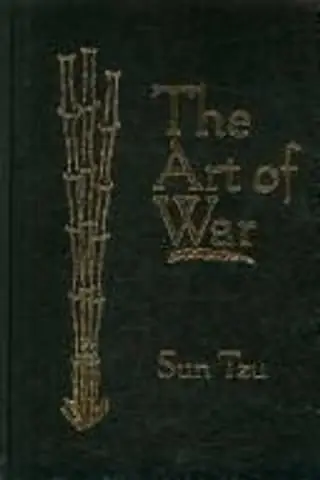
The Art of War summary
by Sun Tzu · -500 · 8 key ideas · 21-minute read
An ancient Chinese manual arguing that the best victories are won before a battle begins, through preparation, knowledge, flexibility and avoiding needless fights.
Why read it
For anyone who competes, negotiates or leads: its principles on preparation, information and timing apply far beyond the battlefield. It's also short, and one of the most influential strategy texts ever written.
The Art of War in brief
The Art of War is a short text of thirteen chapters, written as concise, often poetic advice for rulers and generals in ancient China. Translations differ a great deal in wording, but the core message is consistent: war is a matter of life and death for a state and must be approached with careful thought, not passion.
Sun Tzu's central ideal is to win without fighting. The best general defeats the enemy's plans and alliances before armies ever meet. Battles are costly, prolonged campaigns ruin states, and fighting in anger is a mistake. Victory comes from preparation: making yourself impossible to defeat, then waiting for the enemy to offer an opening.
To do this you need information about yourself, your opponent, the terrain and the conditions. You also need deception: appearing weak when strong, near when far. And you need flexibility: like water, an army should avoid strong points, flow toward weak ones and change shape to fit the situation.
The later chapters deal with terrain, manoeuvre, the use of fire and the use of spies, always returning to the same themes of knowledge, adaptability and economy of force. The book's influence has spread far beyond the military, into business, sport, politics and negotiation, though applying it outside war requires care.
The 8 key ideas
1. Win without fighting
The best fight is the one you never have to have.
2. Know them and know yourself
Know them, know you, and the hundred battles take care of themselves.
3. Win first, then fight
Win in preparation. The battle just confirms it.
4. All warfare is deception
Don't lie. Just don't show your whole hand.
5. Be like water
Don't hit the rock. Flow around it.
6. Count the cost, never fight in anger
Anger passes. What you destroy in anger doesn't come back.
7. Ordinary and extraordinary
Pin them with the expected. Win with the unexpected.
8. Shared danger builds unity
Same boat, same storm: rivals row together.
Read the full guide in Kinquire. Every idea with a real example, a diagram and one thing to try today, plus a quick quiz so it sticks. Free to start.
Read The Art of WarKey takeaways
- Look for a way to reach your goal without a direct fight.
- Research your opponent and assess yourself honestly before any big contest.
- Prepare until you can't easily lose, then wait for an opening.
- Push where resistance is weakest, not where it's strongest.
- Never start a costly fight while you're angry.
- Combine a solid conventional approach with one unexpected move.
Our take
The Art of War earns its reputation: it is compact, clear-eyed and full of principles, like preparation, knowledge, adaptability and avoiding needless conflict, that apply far beyond war. Its emphasis on winning without fighting is surprisingly humane for a military text. But it is easy to misuse. Business books often lift its lines out of context, turning colleagues and customers into enemies and treating deception as a virtue. Its terse style allows translators and commentators to read many things into it, so some popular interpretations say more about the reader than the text. Its authorship and date are uncertain, and translations differ widely in tone.
About Sun Tzu
Sun Tzu (Sunzi, “Master Sun”) is traditionally said to have been a general serving the state of Wu around 500 BC. Historians debate whether he was a single real person, and many date the text as we have it to somewhat later.
If you liked this
- The Prince by Niccolò Machiavelli
- The 48 Laws of Power by Robert Greene
- Tao Te Ching by Laozi
- Meditations by Marcus Aurelius
- Letters from a Stoic by Seneca
- The Enchiridion by Epictetus