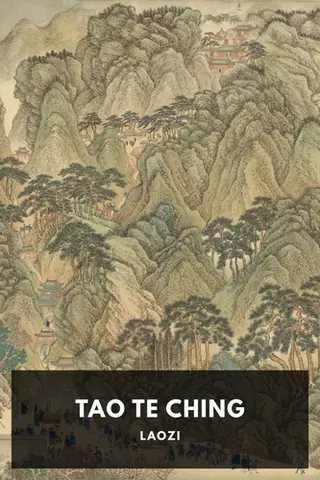
Tao Te Ching summary
by Laozi · -400 · 7 key ideas · 17-minute read
A short ancient Chinese classic teaching that the wisest way to live and lead is to stop forcing, stay humble and soft like water, and move with the natural flow of things — the Tao.
Why read it
For anyone who feels they push too hard — at work, in relationships or with themselves — and wants a different model of strength built on yielding, simplicity and enough.
Tao Te Ching in brief
The Tao Te Ching is a book of 81 short chapters, many only a few lines long, written in compressed, poetic Chinese. Its title is often rendered 'The Classic of the Way and its Power (or Virtue)'. Because the language is so terse, translations vary enormously — two versions of the same chapter can look quite different. Chapter numbers below follow the standard arrangement.
It opens with a paradox: the Tao that can be put into words is not the constant Tao. The Tao is the source and pattern of all things, but it cannot be captured by concepts. Rather than define it, the text points to it through images — water, the uncarved block, the valley, the infant, the empty bowl.
From this follows its central practical teaching, wu wei, often translated 'non-action' or 'effortless action'. It does not mean doing nothing. It means acting in harmony with how things naturally unfold, without forcing, grasping or showing off. The sage achieves much by not struggling for it.
The text praises softness over hardness, humility over pride, simplicity over cleverness, and contentment over accumulation. It notices how opposites depend on each other, and how things pushed to an extreme turn into their opposite. Its ideal person is humble, unhurried and content, more like a valley than a mountain.
Much of the book is advice to rulers. The best leaders, it says, are barely noticed; they govern lightly, avoid unnecessary rules and war, and let people flourish on their own. Today, readers use it as guidance for leadership, creativity and a calmer way of living.
The 7 key ideas
1. The way that can't be named
The map is not the land.
2. Wu wei: act without forcing
Fix it while it's small.
3. Be like water
Soft and persistent beats hard and brittle.
4. The use of emptiness
The empty centre turns the wheel.
5. Opposites make each other
Fill the bowl, but not to the brim.
6. Know when you have enough
Enough is a feast.
7. Lead so lightly they barely notice
Cook the small fish gently.
Read the full guide in Kinquire. Every idea with a real example, a diagram and one thing to try today, plus a quick quiz so it sticks. Free to start.
Read Tao Te ChingKey takeaways
- Deal with problems while they're small, instead of forcing big fixes later.
- Choose flexibility and persistence over rigid force in conflicts.
- Protect empty space in your calendar and conversations.
- Stop before the bowl overflows — define 'enough' in key areas.
- Lead by setting direction and stepping back.
- Read at least two translations to see the range of meaning.
Our take
The Tao Te Ching has lasted over two thousand years because its images — water, the empty hub, the small fish — are vivid and surprisingly practical, offering an antidote to cultures obsessed with force and accumulation. Its weaknesses are partly its strengths: its brevity and ambiguity mean it can be read to support almost anything, and popular English versions sometimes reflect the translator more than the original. Some passages, like advice to keep people simple and without knowledge, sound troubling to modern readers. Read several translations, and treat it as a source of reflection rather than a rulebook.
About Laozi
Tradition credits the text to Laozi ('Old Master'), said to be an archivist at the Zhou court, but historians are unsure whether he existed; the book was probably shaped by several hands over time. Its earliest known partial copy, on bamboo slips found at Guodian, dates from around 300 BC.
If you liked this
- Meditations by Marcus Aurelius
- The Art of War by Sun Tzu
- Letters from a Stoic by Seneca
- The Enchiridion by Epictetus
- The Obstacle Is the Way by Ryan Holiday
- Ego Is the Enemy by Ryan Holiday