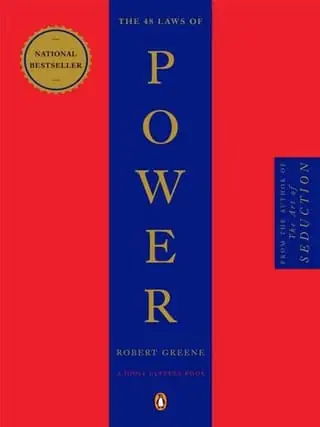
The 48 Laws of Power summary
by Robert Greene · 1998 · 8 key ideas · 20-minute read
A blunt, history-packed catalogue of how power is won, kept and lost, written on the premise that the game of power is unavoidable, so you'd better understand it.
Why read it
For anyone who wants to recognise the power games around them at work, in politics and in social life. Best read defensively: as a guide to spotting manipulation, not a script for daily behaviour.
The 48 Laws of Power in brief
Greene starts from an uncomfortable premise: everyone is involved in a constant game of power, whether they admit it or not. The feeling of having no power over people and events is unbearable to us, so we all seek it, often indirectly. Those who claim to be above the game are frequently just playing it in subtler ways.
He distils this game into 48 laws, such as never outshine the master, always say less than necessary, and win through your actions, never through argument. Each law is illustrated with stories from history, from royal courts and ancient generals to con artists and celebrities. Most include a transgression, someone who broke the law and suffered, and an observance, someone who followed it and gained.
Many laws revolve around a few themes: managing appearances and reputation, controlling information, understanding other people's self-interest and vanity, using timing and absence, and staying adaptable. Greene also includes a reversal for each law, explaining when breaking it might work better, which shows the laws are tactics rather than absolutes.
The book is amoral by design. Greene presents power as it has historically operated, without asking whether it should. That makes it both illuminating and controversial: it can help readers see manipulation clearly, and it can also be used to manipulate.
The 8 key ideas
1. You can't opt out of the game
Ignoring the game doesn't take you off the board.
2. Never outshine the master
Let the master shine, and you'll be kept close.
3. Say less than necessary
Fewer words, more weight.
4. Win through actions, not argument
Don't win the debate. Show the result.
5. Appeal to self-interest
Don't ask for pity. Offer a reason.
6. Use absence to raise value
Be valuable first. Then be a little harder to get.
7. Guard your credit
Do the work. Then make sure it has your name on it.
8. Assume formlessness
Be like water: hard to grab, impossible to break.
Read the full guide in Kinquire. Every idea with a real example, a diagram and one thing to try today, plus a quick quiz so it sticks. Free to start.
Read The 48 Laws of PowerKey takeaways
- Map how influence actually works in the groups you belong to.
- Make your boss look good where you honestly can, rather than upstaging them.
- Say what you need to, then stop talking.
- Demonstrate your ideas instead of winning arguments.
- Frame requests around the other person's interests.
- Document your contributions so your credit can't be quietly taken.
Our take
The 48 Laws of Power is gripping and full of memorable history, and it does illuminate how manipulation and status games work. Many readers find it useful for spotting tactics used against them. But it has serious problems. It is amoral by design, and many laws, if followed literally, would damage trust and relationships. Its stories are cherry-picked and often simplified, and survivorship bias is everywhere: we don't hear about people who followed the laws and failed. Some laws contradict each other, which Greene partly acknowledges through his reversals. Research on long-term success suggests that cooperation and trustworthiness are powerful assets too. Read it as a field guide to recognise games, not a playbook.
About Robert Greene
Robert Greene is an American author known for books on power, strategy and human nature. The 48 Laws of Power, produced with Joost Elffers, was his first book.
If you liked this
- The Prince by Niccolò Machiavelli
- The Art of War by Sun Tzu
- Influence by Robert B. Cialdini
- How to Win Friends and Influence People by Dale Carnegie
- Meditations by Marcus Aurelius
- Letters from a Stoic by Seneca