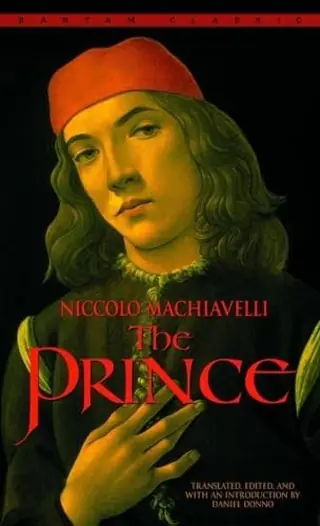
The Prince summary
by Niccolò Machiavelli · 1532 · 8 key ideas · 23-minute read
A blunt guide to gaining and keeping political power that judges leaders by what actually works, not by how they ought to behave.
Why read it
For anyone who wants to understand power as it really operates in politics, organisations and institutions, and to recognise the tactics used around them. It's also the founding text of modern political realism.
The Prince in brief
Machiavelli wrote The Prince as a short handbook for a new ruler, dedicating it to a member of the Medici family, probably hoping to win back a role in government. Drawing on his years as a diplomat and on ancient history, he sets out how principalities are won, held and lost.
His most radical move is method. Earlier writers on rulers described ideal princes and imagined republics. Machiavelli says he will describe things as they actually are. In a world where many people are not good, a ruler who insists on being good in every situation will be ruined. He must learn when not to be good, and use that ability according to necessity.
From this come his famous, uncomfortable conclusions. It is safer to be feared than loved, if you can't be both, though you must never be hated. A ruler should combine the strength of the lion with the cunning of the fox. Necessary harsh measures should be done all at once, while benefits are handed out gradually. A state should rely on its own armed forces, not hired mercenaries.
Running through the book is the tension between virtù, a ruler's energy, skill and adaptability, and fortuna, the unpredictable force of chance. Fortune controls about half of what happens, Machiavelli suggests, but prepared and bold rulers can shape the rest. The book ends with a passionate plea for someone to unite and free Italy from foreign domination.
The 8 key ideas
1. Deal with how things are
Plan for the world as it is, not as it should be.
2. Change makes enemies
Losers of the old fight hard. Winners of the new wait and see.
3. Feared, but never hated
Be respected for your consequences, never hated for your greed.
4. The lion and the fox
Fox to spot the trap, lion to scare the wolves.
5. Harm all at once, benefits slowly
Rip off the plaster; drip-feed the treats.
6. Rely on your own strength
Fight in your own armour.
7. Build dikes before the flood
Build the dike when the sky is clear.
8. Ask for advice, beware flattery
Pick your truth-tellers. Then make it safe to tell the truth.
Read the full guide in Kinquire. Every idea with a real example, a diagram and one thing to try today, plus a quick quiz so it sticks. Free to start.
Read The PrinceKey takeaways
- Base decisions on how people actually behave, not how they ought to.
- When introducing change, expect resistance and plan for early wins.
- Be consistent with consequences, but never take what people feel is theirs.
- Combine strength and cunning: spot traps and show you can't be pushed around.
- Build your own core capabilities instead of renting them.
- Prepare for bad luck while times are good.
Our take
The Prince remains one of the most influential and contested books in political thought. Its strengths are its honesty about how power works, its focus on results and its psychological insight into fear, loyalty, change and flattery. Its dangers are equally clear: it can justify deception and cruelty, and it was written for a world of small warring states and absolute rulers, not modern democracies with laws and rights. Scholars still debate whether it was sincere advice, a job application, a warning or partly ironic, especially since Machiavelli elsewhere praised republics. Read it as a lens for recognising power, not a manual for daily life.
About Niccolò Machiavelli
Niccolò Machiavelli was a Florentine diplomat and government official who lost his post when the Medici family returned to power in 1512. He wrote The Prince soon after; it was published in 1532, five years after his death.
If you liked this
- The Art of War by Sun Tzu
- The 48 Laws of Power by Robert Greene
- Meditations by Marcus Aurelius
- Letters from a Stoic by Seneca
- The Enchiridion by Epictetus
- The Obstacle Is the Way by Ryan Holiday