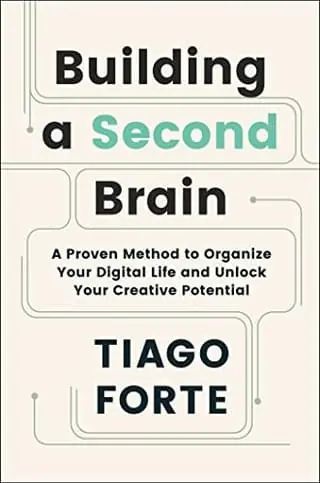
Building a Second Brain summary
by Tiago Forte · 2022 · 7 key ideas · 16-minute read
Save the ideas and information that resonate with you in a digital notes system, organise them by what you're working on, and turn them into finished work.
Why read it
For anyone drowning in articles, bookmarks and half-remembered ideas, especially writers, students, researchers and creators. It turns note-taking from a storage habit into a creative engine.
Building a Second Brain in brief
We consume more information than ever, but most of it vanishes. We read a brilliant article, forget it a week later and can't find it when we need it. Forte argues we need a 'second brain': a trusted digital system, usually a notes app, where we store the knowledge we come across so we can find and use it later.
His method is called CODE. Capture: keep only what resonates with you, not everything you read. Organise: sort notes by the projects and responsibilities they'll help with, using a system called PARA. Distill: summarise notes in layers so the essence is quick to grasp. Express: use your notes to create things, sharing your work in small, reusable chunks.
The heart of the book is a shift from consuming to creating. The value of a note lies not in storing it but in using it, so the system is designed around action. Forte encourages building finished work out of 'intermediate packets', small pieces that can be assembled and reused.
He ends with habits to keep the system alive, such as weekly reviews and project checklists, and with the encouragement that a second brain should free your biological brain to imagine, create and be present, rather than remember.
The 7 key ideas
1. Your brain is for ideas
Let the app remember so you can think.
2. Capture what resonates
Save what resonates, not what's available.
3. Organise with PARA
Organise for action, not for subject.
4. Progressive summarisation
Each visit, make the note a little easier to use.
5. Express: build with intermediate packets
Never start from a blank page again.
6. Creative execution
End each session with a bridge to the next.
7. Habits that keep it alive
Messy and used beats perfect and ignored.
Read the full guide in Kinquire. Every idea with a real example, a diagram and one thing to try today, plus a quick quiz so it sticks. Free to start.
Read Building a Second BrainKey takeaways
- Choose one notes app and make it your second brain.
- Capture only what resonates, guided by a list of favourite problems.
- Organise with PARA: Projects, Areas, Resources, Archives.
- Summarise notes progressively each time you revisit them.
- Build finished work from small, reusable intermediate packets.
Our take
Building a Second Brain gives a clear, flexible system that suits anyone who works with information, and PARA and progressive summarisation are genuinely practical. But the method risks becoming an end in itself: some readers spend more time organising notes than thinking or creating, the 'collector's fallacy'. The book can feel oriented to knowledge workers and creators who produce content online. It's also lighter on evidence than on enthusiasm. Used lightly and with a focus on output, it's a valuable framework.
About Tiago Forte
Tiago Forte is a productivity writer and teacher who founded Forte Labs and runs online courses on personal knowledge management.
If you liked this
- Getting Things Done by David Allen
- Deep Work by Cal Newport
- Atomic Habits by James Clear
- The Power of Habit by Charles Duhigg
- The 7 Habits of Highly Effective People by Stephen R. Covey
- Mindset by Carol S. Dweck