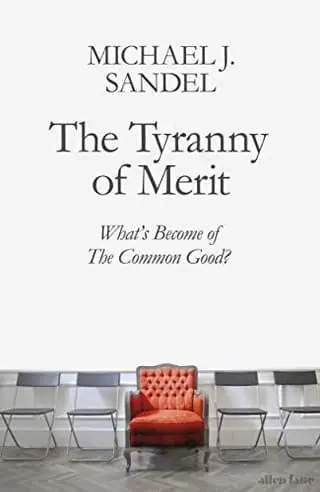
The Tyranny of Merit summary
by Michael J. Sandel · 2020 · 7 key ideas · 18-minute read
The ideal of meritocracy, that success reflects what you deserve, breeds arrogance among winners and humiliation among losers, and helped fuel the populist backlash.
Why read it
For anyone who believes hard work and talent should determine who gets ahead and wants to examine that belief honestly. It reframes debates about university admissions, inequality and the dignity of work.
The Tyranny of Merit in brief
Sandel begins with the 2019 college admissions scandal in the United States, in which wealthy parents paid to cheat their children into elite universities. The outrage, he argues, revealed how much status we attach to getting into the right college, and how deeply we believe success should be earned.
His target is not cheating but meritocracy itself. Even a perfectly fair meritocracy, he argues, has a dark side. It tells winners that they deserve their success and losers that they deserve their failure. The result is hubris at the top and humiliation below.
Sandel traces how politicians of the centre-left and centre-right embraced a 'rhetoric of rising': if you work hard and get educated, you can go as far as your talents take you. In a society of growing inequality, this message implied that those who didn't rise had only themselves to blame. He sees this as one source of the anger behind the populist backlash of 2016.
He proposes changes: shifting status away from university credentials, choosing among qualified applicants for elite colleges by lottery, investing in vocational education and restoring the dignity of work by recognising all the ways people contribute to the common good. Above all, he calls for humility about the role of luck in success.
The 7 key ideas
1. The dark side of merit
A fair race still leaves losers. How we treat them is the test.
2. The rhetoric of rising
A ladder with wider rungs isn't fairness.
3. Credentialism: the last acceptable prejudice
A degree is a credential, not a measure of worth.
4. Luck, talent and desert
There but for the grace of luck go I.
5. Grace versus merit
Gratitude is the antidote to hubris.
6. A lottery for the qualified
Above the bar, it's mostly luck. Admit it.
7. The dignity of work
Respect is part of justice, not a bonus.
Read the full guide in Kinquire. Every idea with a real example, a diagram and one thing to try today, plus a quick quiz so it sticks. Free to start.
Read The Tyranny of MeritKey takeaways
- Acknowledge the luck behind your own success, out loud.
- Avoid treating a degree as a measure of someone's worth.
- Value and thank work that society underpays.
- Question whether market rewards reflect real contribution.
- Replace pride with gratitude when you win.
Our take
The Tyranny of Merit offers a powerful moral critique and gives voice to the resentment many feel toward credentialed elites. Critics argue that Sandel offers few concrete policies, that the lottery idea is impractical, and that the alternative to merit, such as nepotism or connections, may be worse. Some economists think he underrates education as a route out of poverty. Others say the book focuses mostly on the United States and that the link between meritocracy and populism is one factor among many. Its call for humility and for respecting all work is widely praised.
About Michael J. Sandel
Michael J. Sandel is an American political philosopher who has taught at Harvard University for decades. His course on justice became one of Harvard's most popular and was widely shared online.
If you liked this
- Factfulness by Hans Rosling with Ola Rosling and Anna Rosling Rönnlund
- The Righteous Mind by Jonathan Haidt
- The Anxious Generation by Jonathan Haidt
- Outliers by Malcolm Gladwell
- David and Goliath by Malcolm Gladwell
- Humankind by Rutger Bregman