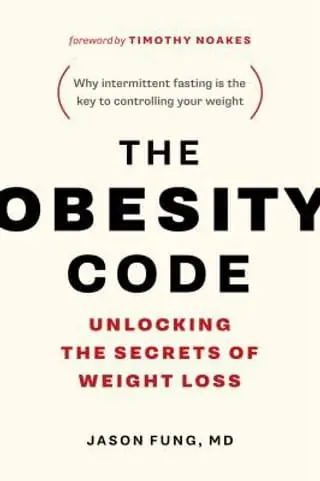
The Obesity Code summary
by Jason Fung · 2016 · 7 key ideas · 18-minute read
A kidney specialist argues that obesity is driven mainly by the hormone insulin rather than by calories alone, and that changing what and when we eat, including fasting, is the way out.
Why read it
For anyone frustrated by failed calorie-counting diets who wants a different way to think about weight. It popularised intermittent fasting, but its central theory is contested by many obesity researchers, so read it alongside other views.
The Obesity Code in brief
Fung begins by arguing that the standard advice, eat less and move more, has failed. Most people who lose weight by cutting calories regain it. He concludes that the problem isn't willpower but a flawed theory of what causes obesity.
His alternative is a hormonal theory. The body, he argues, regulates its weight around a set point, much like a thermostat, and the hormone insulin plays the central role in setting it. When insulin is persistently high, the body stores fat and defends a higher weight, adjusting hunger and metabolism to resist change.
He then explains what raises insulin: refined carbohydrates and especially sugar, frequent eating and snacking, and factors such as stress and poor sleep. Over time, persistently high insulin leads to insulin resistance, which in turn drives insulin even higher in a vicious cycle.
The solution addresses both what and when we eat. Fung recommends cutting added sugars and refined grains, moderating protein, eating more natural fats and fibre, and above all, giving the body regular periods without food through intermittent fasting so that insulin levels can fall.
The book is persuasive and practical, and it helped make intermittent fasting mainstream. But its insulin-centred explanation of obesity is disputed, and controlled studies have not shown that the insulin theory explains weight gain better than overall energy intake.
The 7 key ideas
1. Why calorie counting fails
The body fights back against hunger.
2. The body's thermostat
Change the thermostat, not just the window.
3. Insulin drives fat storage
High insulin, storage mode; low insulin, burning mode.
4. The insulin resistance trap
Constant exposure breeds resistance.
5. When you eat matters
Not just what you eat, but how often.
6. What to eat: five steps
Less sugar, less white flour, more real food.
7. Fasting as a tool
Give insulin a break.
Read the full guide in Kinquire. Every idea with a real example, a diagram and one thing to try today, plus a quick quiz so it sticks. Free to start.
Read The Obesity CodeKey takeaways
- Cut added sugars and refined grains first.
- Reduce constant snacking and allow longer gaps between meals.
- Eat whole foods with plenty of fibre.
- If you try fasting, start gently and talk to a doctor if you take medication.
- Don't blame willpower alone for failed diets; hunger and metabolism push back.
- Treat the insulin theory as one view in an ongoing debate, not settled science.
Our take
The Obesity Code offers a sympathetic message, that failed diets aren't simply a matter of willpower, and practical advice that overlaps with mainstream guidance: cut sugar and refined carbohydrates, stop constant snacking, eat whole foods. It also helped popularise intermittent fasting, which suits many people. But its central claim, that insulin rather than energy balance is the main cause of obesity, is disputed by many obesity researchers, and controlled studies have not confirmed it. Fung tends to present this contested theory as established and to downplay calories. Use the practical tips, and check fasting plans with a doctor, especially if you take medication.
About Jason Fung
Jason Fung is a Canadian physician who specialises in kidney disease (nephrology) and has worked in Toronto. He has become a well-known advocate of intermittent fasting for weight loss and type 2 diabetes.
If you liked this
- Outlive by Peter Attia with Bill Gifford
- Ultra-Processed People by Chris van Tulleken
- Why We Sleep by Matthew Walker
- Born to Run by Christopher McDougall
- How Not to Die by Michael Greger with Gene Stone
- The Body: A Guide for Occupants by Bill Bryson