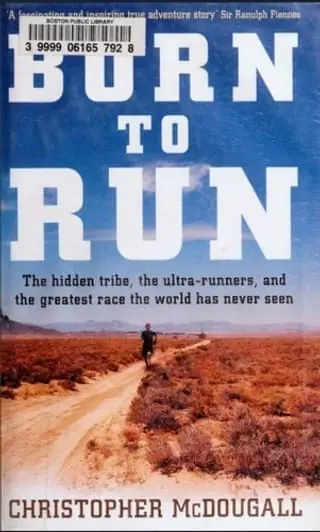
Born to Run summary
by Christopher McDougall · 2009 · 7 key ideas · 18-minute read
An injured runner goes looking for a hidden tribe of super-athletes in Mexico and comes back arguing that humans evolved to run, and that modern shoes and habits got in the way.
Why read it
For anyone who has given up running because it hurts, or who wants to rediscover why moving can feel joyful. It's a gripping adventure story, though its claims about shoes and barefoot running go beyond what later research supports.
Born to Run in brief
The book starts with a simple question McDougall put to his doctor: why does my foot hurt? He was a frequently injured recreational runner, and the medical answer he got was that running is hard on the body and he should probably stop. He didn't accept it.
His search leads to the Tarahumara, or Rarámuri, an indigenous people living in the remote Copper Canyons of northern Mexico who are famous for running huge distances in thin sandals. He also finds Caballo Blanco, a reclusive American runner living among them who dreams of staging a race between the Tarahumara and top American ultrarunners.
Woven through the adventure are big ideas: that cushioned running shoes may encourage harmful running form, that human bodies show signs of having evolved for long-distance running, and that early humans may have hunted by running animals to exhaustion in the heat.
The story builds to a 50-mile race through the canyons, with a cast including the ultrarunner Scott Jurek, a pair of young wild-card runners, and a barefoot-running enthusiast. The race becomes a celebration of running as play rather than punishment.
The book sparked a global boom in barefoot and minimalist running. Its sense of joy and its call to run for the love of it hold up well; its bolder claims about shoes and injuries have been tested since and found to be more complicated than it suggested.
The 7 key ideas
1. Why does my foot hurt?
Ask what injury-free runners do differently, not whether running hurts.
2. The running people
They don't train to run; they run to play.
3. Are shoes the problem?
Let your feet feel the ground, but change slowly.
4. Built for distance
We're slow sprinters but brilliant long-haulers.
5. Running down dinner
Patience is a predator.
6. Easy, light, smooth, fast
Easy first. Fast follows.
7. Run for love, not fear
The run you enjoy is the run you'll keep doing.
Read the full guide in Kinquire. Every idea with a real example, a diagram and one thing to try today, plus a quick quiz so it sticks. Free to start.
Read Born to RunKey takeaways
- Focus on how you run: shorter, lighter steps landing under your body.
- If you try minimal shoes or barefoot running, build up very gradually.
- Run at an easy pace most of the time; speed follows relaxation.
- Make running social and playful so you keep doing it for years.
- When injured, look for what changed in your training before the pain started.
Our take
Born to Run is a thrilling story that made millions of people curious about running again, and its message that running can be joyful, social and lifelong is valuable. Its scientific claims need caution. Research since its publication has not shown that barefoot or minimalist shoes reduce injuries overall, and many runners hurt themselves by switching too quickly. The endurance running hypothesis is plausible but debated, and some critics feel the book romanticises the Rarámuri and dramatises its characters. Take it as inspiration and an invitation to experiment carefully, not as a training manual.
About Christopher McDougall
Christopher McDougall is an American journalist and a former Associated Press war correspondent who has written for magazines including Men's Health and Esquire.
If you liked this
- Spark by John J. Ratey with Eric Hagerman
- Outlive by Peter Attia with Bill Gifford
- Why We Sleep by Matthew Walker
- How Not to Die by Michael Greger with Gene Stone
- The Body: A Guide for Occupants by Bill Bryson
- Lifespan by David A. Sinclair with Matthew D. LaPlante