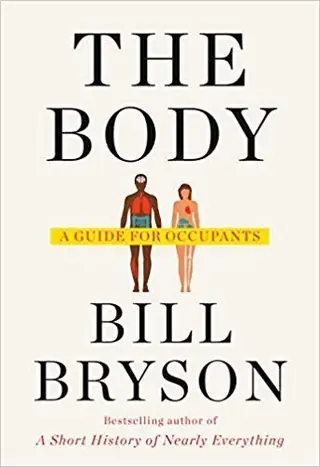
The Body: A Guide for Occupants summary
by Bill Bryson · 2019 · 7 key ideas · 18-minute read
A witty head-to-toe tour of the human body that leaves you amazed at what it does, how much is still unknown, and how strangely medicine stumbled into its discoveries.
Why read it
For curious readers who want to understand the body they live in without a biology degree. It is less a health manual than a source of wonder and perspective, with useful lessons about medicine and lifestyle along the way.
The Body: A Guide for Occupants in brief
Bryson sets out to do for the body what A Short History of Nearly Everything did for science: explain it with curiosity and humour. He moves system by system, through skin, microbes, brain, head, heart and blood, bones, muscles, the immune system, lungs, digestion, sleep, reproduction and more.
Each chapter mixes biology with history. Alongside how an organ works, he tells the stories of the eccentric, brave and sometimes reckless people who figured it out, from self-experimenting doctors to lucky accidents in the laboratory, and of the many contributors history forgot.
A recurring theme is how much we still don't know. Basic questions about sleep, pain, the brain, the immune system and even nutrition remain partly unanswered, and Bryson enjoys pointing out where confident textbook claims and popular health 'facts' rest on surprisingly thin evidence.
Later chapters turn to illness and medicine: infectious diseases, cancer, the rise of antibiotic resistance, the costs and inequalities of healthcare, and the lifestyle diseases now killing most people in rich countries. He ends with death, which he treats with the same calm curiosity.
The book doesn't offer a programme or a diet, but it nudges readers toward a few practical conclusions: move more, sit less, don't overuse antibiotics, be wary of anyone selling certainty about health, and appreciate the improbable, resilient machine you live in every day.
The 7 key ideas
1. You are a marvel, mostly unexplored
Ordinary body, extraordinary machine, still a mystery.
2. The brain in the dark
You don't see the world; your brain draws it for you.
3. You are an ecosystem
Most germs are friends; save antibiotics for real enemies.
4. The immune system's double edge
A good defence knows when not to fight.
5. Medicine's lucky accidents
A discovery is a seed, not a cure.
6. Built to move
Some movement beats none, every single time.
7. We live longer, but fall ill of how we live
Germs once took us young; now habits take us slowly.
Read the full guide in Kinquire. Every idea with a real example, a diagram and one thing to try today, plus a quick quiz so it sticks. Free to start.
Read The Body: A Guide for OccupantsKey takeaways
- Be sceptical of simple health claims; much about the body is still being worked out.
- Use antibiotics only when truly needed, and never for colds or flu.
- Spend time outdoors and around nature to support a balanced immune system.
- Move a little every hour; any increase in activity brings benefits.
- Read health headlines carefully: early findings are seeds, not cures.
Our take
The Body is a delightful, reliable introduction that leaves readers curious and grateful rather than anxious. Bryson is good at flagging uncertainty and at showing that medicine is a human, messy enterprise. Its limits come from its breadth: it's a tour, so no topic goes deep, and it offers few practical guidelines. A handful of its many facts have been questioned or will date as research moves on, which Bryson himself would expect. It's best read as an entertaining foundation that makes other, more practical health books easier to understand.
About Bill Bryson
Bill Bryson is an American-born writer who has spent much of his life in Britain. He is best known for travel books and for A Short History of Nearly Everything.
If you liked this
- A Short History of Nearly Everything by Bill Bryson
- I Contain Multitudes by Ed Yong
- The Emperor of All Maladies by Siddhartha Mukherjee
- Spark by John J. Ratey with Eric Hagerman
- Why We Sleep by Matthew Walker
- Outlive by Peter Attia with Bill Gifford