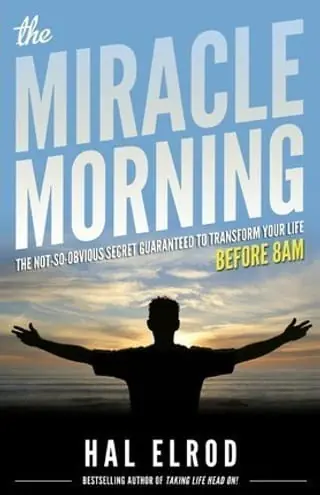
The Miracle Morning summary
by Hal Elrod · 2012 · 6 key ideas · 15-minute read
Win the day before it starts by waking up early and spending your first hour on six practices for personal growth: Silence, Affirmations, Visualisation, Exercise, Reading and Scribing.
Why read it
For people who feel they never have time for themselves and want a simple, energising morning routine. It's especially popular with those trying to restart after a difficult stretch.
The Miracle Morning in brief
Elrod argues that how you start your morning shapes the rest of your day, and over time the course of your life. Most people wake up reluctantly, hit snooze and rush into their day reacting to demands. He proposes the opposite: rising early on purpose and dedicating the first part of your day to becoming the person you need to be to achieve your goals.
The book is rooted in his own story. After surviving a near-fatal car crash at 20, he rebuilt his life, only to be hit by financial and emotional crisis years later during the 2008 recession. Searching for a way out, he designed a morning routine combining the most powerful personal development practices he knew, and credits it with turning his life around.
The routine uses the acronym SAVERS: Silence, Affirmations, Visualisation, Exercise, Reading and Scribing (journaling). He offers a snooze-proof strategy for waking up, a six-minute version for busy days, and a 30-day challenge for making the habit stick.
The underlying message is that your level of success tends to reflect your level of personal development, and that a daily, protected time for growth is the most reliable way to raise both.
The 6 key ideas
1. Win the morning
Win the morning, and you'll probably win the day.
2. Rebuild from rock bottom
You can't change what happened. You can change what's next.
3. SAVERS
Silence, Affirm, Visualise, Exercise, Read, Scribe.
4. Snooze-proof your wake-up
Make getting up easier than going back to bed.
5. The six-minute version
Six minutes beats zero minutes every time.
6. The 30-day challenge
Expect it to be hard at first; that's normal, not failure.
Read the full guide in Kinquire. Every idea with a real example, a diagram and one thing to try today, plus a quick quiz so it sticks. Free to start.
Read The Miracle MorningKey takeaways
- Protect time at the start of the day for your own growth.
- Try SAVERS: Silence, Affirmations, Visualisation, Exercise, Reading, Scribing.
- Use the six-minute version on busy days rather than skipping.
- Put your alarm across the room, but go to bed early enough to sleep well.
- Commit to 30 days with an accountability partner.
Our take
The Miracle Morning is upbeat and practical, and SAVERS is an easy way to combine useful habits like exercise, reading and journaling. Its weaknesses: it encourages early rising without enough emphasis on getting enough sleep, and its suggestion that tiredness is largely mindset conflicts with sleep science. It relies heavily on Elrod's personal story and testimonials rather than evidence, and night owls or shift workers may find it ill-suited. The core idea of protected daily time for growth is sound, whenever in the day it happens.
About Hal Elrod
Hal Elrod is an American author and speaker. As a young man he survived a serious head-on car crash, which he has spoken and written about extensively.
If you liked this
- Atomic Habits by James Clear
- Tiny Habits by BJ Fogg
- Eat That Frog! by Brian Tracy
- The Power of Habit by Charles Duhigg
- The 7 Habits of Highly Effective People by Stephen R. Covey
- Mindset by Carol S. Dweck