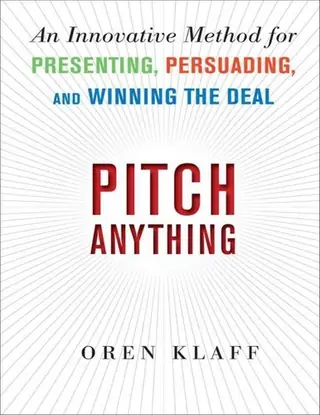
Pitch Anything summary
by Oren Klaff · 2011 · 8 key ideas · 20-minute read
A pitch is won or lost in the listener's primitive brain, so you must control the frame, build momentary status, create intrigue and never appear needy.
Why read it
For founders, dealmakers and anyone who pitches to powerful people. It is opinionated and sometimes overstated, but its ideas on frames, status and neediness are memorable and useful.
Pitch Anything in brief
Klaff argues that most pitches fail not because the idea is bad but because the pitcher misunderstands how listeners process information. He uses a simplified model of the brain in which a primitive ‘croc brain’ screens every message first. It is short-tempered, easily bored and looks for danger and novelty. If your pitch is complex, abstract or dull, it is filtered out before the rational mind ever considers it.
His main tool is the frame: the perspective through which someone interprets a situation. In any meeting, frames collide, and the stronger one absorbs the weaker. Buyers bring power frames, time frames and analyst frames; the pitcher must counter with frames of their own — intrigue, prize and time constraints — to keep control of the interaction.
Klaff adds the importance of social status in a meeting, describing ways to avoid the subordinate ‘beta trap’ and to gain brief local status. He then lays out a pitch structure he calls STRONG: set the frame, tell the story, reveal the intrigue, offer the prize, nail the hookpoint and get a decision — delivered in about twenty minutes.
The book closes with what he considers the deadliest mistake: neediness. Signals of desperation trigger the croc brain's threat response, and buyers pull away. The pitcher must be willing to walk away, focusing on the value they offer rather than on the outcome they want.
The 8 key ideas
1. Pitch to the croc brain
Bore the croc and you never reach the brain.
2. Frames collide — the strong one wins
Accept their frame and you've already lost.
3. Bust power, analyst and time frames
Meet pressure with poise, detail with a story.
4. Be the prize
Don't chase — choose.
5. Grab local status
You don't need to outrank them — just out-know them.
6. The STRONG pitch
Twenty minutes, one big idea, a clear ask.
7. Create hot cognition
Make them want it; let the facts make it safe.
8. Neediness kills the deal
The one who needs it least holds the power.
Read the full guide in Kinquire. Every idea with a real example, a diagram and one thing to try today, plus a quick quiz so it sticks. Free to start.
Read Pitch AnythingKey takeaways
- Open with something novel, concrete and simple enough for a distracted listener.
- Anticipate the other side's frame and plan a calm counter.
- Steer to the topic where you have local expertise.
- Keep the pitch to about twenty minutes and end with a clear ask.
- State real constraints honestly to create urgency.
- Build alternatives so you never pitch from desperation.
Our take
Pitch Anything is lively and memorable, and its ideas about neediness, clarity and not over-explaining are genuinely useful. Its weaknesses are significant. The ‘croc brain’ rests on the triune brain model, which neuroscience has moved past. Its evidence is largely the author's own experience, and some frame tactics can come across as manipulative or arrogant, particularly outside the investment-banking culture it comes from. Read it for the mindset — calm, clear, unneedy and concise — and adapt the more combative tactics with care.
About Oren Klaff
Oren Klaff is an American investment banker and capital raiser who says he developed his method while pitching deals to investors. Pitch Anything was his first book.
If you liked this
- Influence by Robert B. Cialdini
- Made to Stick by Chip Heath and Dan Heath
- To Sell Is Human by Daniel H. Pink
- Never Split the Difference by Chris Voss
- How to Win Friends and Influence People by Dale Carnegie
- Crucial Conversations by Kerry Patterson, Joseph Grenny, Ron McMillan and Al Switzler