How Brands Grow summary
by Byron Sharp · 2010 · 7 key ideas · 17-minute read
Decades of buying data show brands grow mainly by reaching more buyers — especially light ones — and being easy to think of and easy to buy, not by chasing loyalty or radical differentiation.
Why read it
For marketers who want evidence instead of folklore. It challenges cherished beliefs about loyalty, targeting and differentiation, and has reshaped how many big brands spend their budgets.
How Brands Grow in brief
Byron Sharp argues that much of what marketers believe is myth. Drawing on decades of research by the Ehrenberg-Bass Institute and the late Andrew Ehrenberg, he presents patterns in buying behaviour that repeat across categories, countries and time — empirical laws that, he says, marketers ignore at their peril.
The central finding is that brands grow by increasing penetration: getting more people to buy them, even occasionally. Bigger brands have many more buyers and only slightly more loyalty (the Double Jeopardy law). Most of any brand's buyers are light buyers who purchase it rarely, and loyalty is typically divided across a repertoire of brands.
From this, Sharp draws practical conclusions. Retention and loyalty programmes have limited power. Aiming at narrow niches or heavy users misses most of the growth. Customers rarely see brands as meaningfully different, so being distinctive — easy to recognise — matters more than being differentiated.
The job of marketing, then, is to build mental availability (being thought of in buying situations) and physical availability (being easy to find and buy). Sharp sets out simple rules: reach all category buyers continuously, get noticed, refresh memories, use distinctive assets consistently, and make the brand easy to buy.
The 7 key ideas
1. Marketing has laws
Check the beliefs against the buying data.
2. Double Jeopardy: big brands win twice
Grow buyers, and loyalty follows a little.
3. Light buyers matter most
Light buyers are the hidden majority.
4. Loyalty is divided
Customers are polygamous, not monogamous.
5. Be distinctive, not just different
Be recognised before you try to be different.
6. Mental and physical availability
Easy to think of, easy to buy.
7. Reach everyone, continuously
Always on, for everyone who buys the category.
Read the full guide in Kinquire. Every idea with a real example, a diagram and one thing to try today, plus a quick quiz so it sticks. Free to start.
Read How Brands GrowKey takeaways
- Measure growth by how many buyers you have, not just loyalty.
- Don't neglect light and non-buyers; they're most of your opportunity.
- Build and protect distinctive brand assets, and use them everywhere.
- Work on both mental and physical availability.
- Advertise broadly and continuously rather than in rare bursts.
- Treat price promotions with caution.
Our take
How Brands Grow brought hard evidence to a field full of opinion, and its core findings — penetration drives growth, loyalty is divided, distinctiveness matters — are widely accepted among marketing scientists and have changed many big brands' strategies. Its limits: much of the data comes from frequently bought consumer goods in mature markets, so application to B2B, luxury or brand-new categories is debated. The laws describe patterns more than they explain causes. Sharp's combative tone sometimes overstates the case against differentiation and targeting, which critics argue still have roles. A must-read, best balanced with strategic thinking.
About Byron Sharp
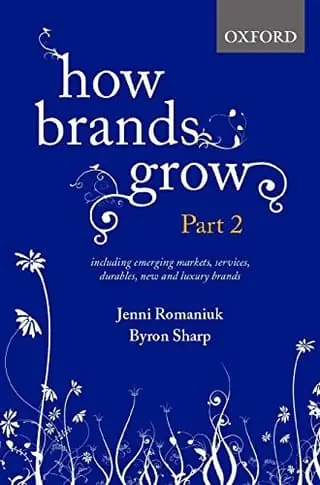
Byron Sharp is professor of marketing science and director of the Ehrenberg-Bass Institute for Marketing Science at the University of South Australia. He later co-wrote How Brands Grow Part 2 with Jenni Romaniuk.
If you liked this
- Alchemy by Rory Sutherland
- Zero to One by Peter Thiel with Blake Masters
- The Lean Startup by Eric Ries
- The Hard Thing About Hard Things by Ben Horowitz
- The E-Myth Revisited by Michael E. Gerber
- $100M Offers by Alex Hormozi