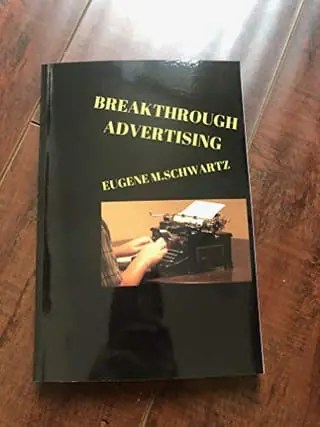
Breakthrough Advertising summary
by Eugene M. Schwartz · 1966 · 7 key ideas · 18-minute read
Copy can't create desire; it can only channel desires that already exist onto your product — so match your message to how aware and how jaded your market already is.
Why read it
For copywriters, email marketers and founders writing landing pages. Its frameworks — levels of awareness and market sophistication — are among the most used tools in modern direct-response copywriting.
Breakthrough Advertising in brief
Eugene Schwartz's book is a dense, demanding manual from the world of mail-order advertising, where every ad's results were counted. Its foundational claim is simple and humbling: advertising cannot create desire. Desire already exists, in millions of people, shaped by forces far bigger than any copywriter. The writer's job is to find the right desire and channel it onto the product.
Before writing a word, Schwartz says, you must diagnose your market on two dimensions. How aware are people of their desire, of solutions and of your product? And how sophisticated is the market — how many similar claims has it already heard? Together these determine what your headline should say and how you should say it.
The second half of the book is craft. Schwartz describes techniques for making a desire vivid, helping prospects identify with the person they want to be, building belief step by step from what they already accept, redefining a product so it seems easier to use, and explaining the mechanism that makes it work.
The result is a strategic framework more than a style guide. Instead of searching for clever lines, Schwartz teaches you to think about where your reader's mind already is — and to start the conversation there. It rewards slow, careful reading more than almost any other book on copywriting.
The 7 key ideas
1. You can't create desire
Don't create the desire. Channel it.
2. Choose the right mass desire
The strongest desire wins, not the cleverest line.
3. Meet them at their level of awareness
Start where their mind already is.
4. Read the market's sophistication
Don't shout louder. Say something new — or say who it's for.
5. The headline's job
Stop the right reader. Then earn the next line.
6. Intensify the desire
Make the future feel real.
7. Build belief step by step
Don't jump to the claim. Walk them there.
Read the full guide in Kinquire. Every idea with a real example, a diagram and one thing to try today, plus a quick quiz so it sticks. Free to start.
Read Breakthrough AdvertisingKey takeaways
- Start from desires people already have, not from your product.
- Choose the strongest, most widely shared desire to lead with.
- Diagnose your audience's awareness before writing headlines.
- Match your claims to the market's level of sophistication.
- Make the benefit vivid with a concrete scene.
- Build belief step by step from what readers already accept.
Our take
Breakthrough Advertising offers some of the most useful strategic thinking in copywriting: the ideas of channelling existing desire, levels of awareness and market sophistication remain widely used, especially online. It treats copy as diagnosis before wordcraft. But it's dense, sometimes repetitive and written for 1960s mail-order print advertising, with dated examples and language. Its techniques are powerful enough to be misused; much direct-response copy of its era made exaggerated claims. And its evidence is the experience of practitioners rather than research. Read it slowly, use the frameworks, and apply them honestly.
About Eugene M. Schwartz
Eugene M. Schwartz was an American direct-response copywriter known for mail-order advertising. Breakthrough Advertising went out of print for years and became a sought-after collector's item among copywriters before being reissued.
If you liked this
- Ogilvy on Advertising by David Ogilvy
- Influence by Robert B. Cialdini
- Made to Stick by Chip Heath and Dan Heath
- Zero to One by Peter Thiel with Blake Masters
- The Lean Startup by Eric Ries
- The Hard Thing About Hard Things by Ben Horowitz