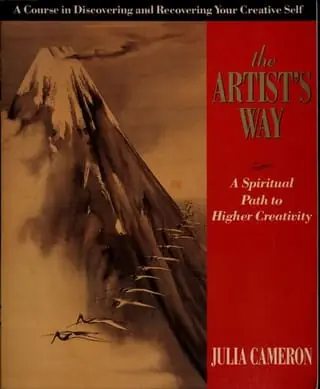
The Artist's Way summary
by Julia Cameron · 1992 · 7 key ideas · 17-minute read
A 12-week course for recovering blocked creativity, built on two daily and weekly tools: Morning Pages and the Artist Date.
Why read it
For anyone who once loved making things and stopped, or who feels creatively stuck. It is less a book to read than a programme to do, and many artists credit it with getting them going again.
The Artist's Way in brief
Cameron starts from a spiritual premise: creativity is the natural order of life, and each of us is a channel for a larger creative energy she often calls the Great Creator. Most adults are not uncreative but blocked, held back by fear, harsh inner criticism, old wounds and the belief that art is only for special people.
The cure is a structured 12-week recovery course. Each week has a theme, such as recovering a sense of safety, identity, power, integrity, possibility and abundance, with essays, exercises and check-ins. Throughout, two basic tools do most of the work: three pages of longhand writing every morning, and a weekly solo outing to delight your creative side.
Along the way Cameron helps readers identify what blocks them: the internal Censor, toxic 'crazymakers', poisonous criticism, perfectionism, and 'shadow artists' who stay close to art without making it. She asks readers to replace negative beliefs with affirmations and to treat their inner artist as a child who needs protection and play.
The later weeks focus on sustaining a creative life: dealing with jealousy, success and failure, protecting time and energy, and developing faith that taking creative steps invites support. The goal is not one masterpiece but a lasting, joyful relationship with your own creativity.
The 7 key ideas
1. Morning Pages
Three pages, every morning, no matter what.
2. The Artist Date
You can't pour from a dry well. Refill it weekly.
3. Silence the Censor
The Censor is a voice, not a verdict.
4. Recognise shadow artists
Close to art isn't the same as making it.
5. Protect yourself from crazymakers
Guard the time before you guard the work.
6. A 12-week recovery
Twelve weeks of small steps beat waiting for a breakthrough.
7. Leap, and the net appears
Take the step first. The support comes after.
Read the full guide in Kinquire. Every idea with a real example, a diagram and one thing to try today, plus a quick quiz so it sticks. Free to start.
Read The Artist's WayKey takeaways
- Write three longhand Morning Pages first thing every day for a week.
- Schedule a solo two-hour Artist Date every week to refill your well.
- Name your inner Censor and keep working while it talks.
- Notice where you're a 'shadow artist' and take one small step into making.
- Set one firm boundary that protects your creative time.
- Commit to a fixed-length experiment, ideally with a friend.
Our take
The Artist's Way has helped huge numbers of people restart creative lives, and its two tools are simple, concrete and easy to test. Morning Pages in particular are widely adopted, even by people who never finish the course. Its drawbacks are its heavy spiritual framing, which some readers find off-putting, a self-help tone that can feel dated, and a tendency to blame blocks on other people ('crazymakers') or childhood wounds. Claims about synchronicity are matters of faith, not evidence. The 12-week workload is real and many people drop out. Taken as a structured experiment rather than gospel, it remains a powerful kick-start.
About Julia Cameron
Julia Cameron is an American writer, teacher and filmmaker who has written many books on creativity. She was once married to the film director Martin Scorsese.
If you liked this
- Big Magic by Elizabeth Gilbert
- The War of Art by Steven Pressfield
- Bird by Bird by Anne Lamott
- Steal Like an Artist by Austin Kleon
- The Creative Act by Rick Rubin
- On Writing by Stephen King