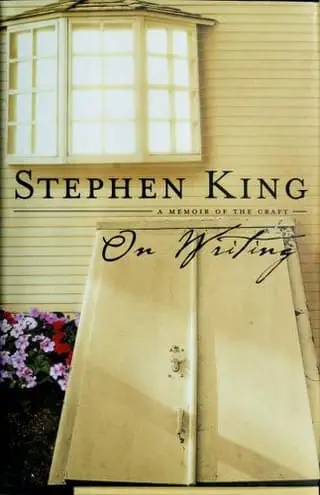
On Writing summary
by Stephen King · 2000 · 7 key ideas · 18-minute read
Part memoir, part masterclass: read a lot, write a lot, keep your tools sharp, tell the truth, and cut what doesn't serve the story.
Why read it
For anyone who wants to write, especially fiction. King mixes his own story with blunt, practical advice that has become one of the most recommended writing books of its era.
On Writing in brief
The book opens with a memoir King calls a CV: snapshots of a childhood with a determined single mother, early stories sold to classmates, a pile of rejection slips, a hard-up early marriage to the writer Tabitha King, a job teaching English, and the breakthrough of Carrie. He is candid about later addiction to alcohol and drugs and his recovery.
Then comes the craft. Writing, he says, is telepathy across time and space. To do it well you need a toolbox: plain vocabulary, solid grammar, and an aversion to adverbs and the timid passive voice. Above all, you must read a lot and write a lot; there is no shortcut.
On fiction itself, King argues that stories are found more than built. He starts from a situation and lets characters act, rather than plotting in advance. He explains his process: write the first draft fast with the door closed, rest it, then rewrite with the door open, cutting at least ten percent and writing for one Ideal Reader.
The book ends with the near-fatal accident he suffered in 1999, when he was struck by a van while walking near his home, and his slow return to writing during recovery. Writing, he concludes, isn't about money or fame; it's about enriching your life and the lives of readers.
The 7 key ideas
1. Read a lot, write a lot
No time to read means no tools to write.
2. Writing is telepathy
Start the picture in your head. Finish it in theirs.
3. Sharpen your toolbox
The road to dull prose is paved with adverbs.
4. Find the story, don't plot it
Ask 'what if', then dig. Don't jackhammer.
5. Door closed, then door open
Write with the door shut. Rewrite with it open.
6. Cut ten percent
Second draft = first draft minus ten percent.
7. Show up daily, and keep going
Rejections on a spike. Words on the page. Every day.
Read the full guide in Kinquire. Every idea with a real example, a diagram and one thing to try today, plus a quick quiz so it sticks. Free to start.
Read On WritingKey takeaways
- Read in every gap and write every day; there's no shortcut.
- Choose a few precise details and let readers finish the picture.
- Use plain words and active verbs; challenge every adverb.
- Draft fast with the door closed, rest it, then revise for an Ideal Reader.
- Cut at least ten percent from your first draft.
- Set a daily word target and keep going through rejection.
Our take
On Writing is unusually readable and honest, and its core advice (read widely, write daily, cut ruthlessly, write plainly) is sound for almost anyone. The memoir sections add warmth and make the lessons stick. Its limits come from its author: the advice is tuned to commercial fiction and to King's own discovery-driven method, which doesn't suit every writer, and his bans on adverbs and the passive voice are stricter than good style requires. There's little on structure, nonfiction or making a living today. Still, it has aged well and remains one of the best starting points for new writers.
About Stephen King
Stephen King is an American novelist known for horror and suspense fiction; his first published novel was Carrie (1974). He has lived for most of his life in Maine, where many of his stories are set.
If you liked this
- Bird by Bird by Anne Lamott
- The Elements of Style by William Strunk Jr. and E.B. White
- On Writing Well by William Zinsser
- Steal Like an Artist by Austin Kleon
- The War of Art by Steven Pressfield
- Big Magic by Elizabeth Gilbert