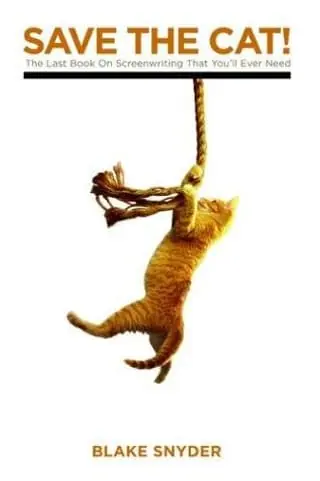
Save the Cat! summary
by Blake Snyder · 2005 · 7 key ideas · 18-minute read
A practical, commercial guide to screenwriting: nail a one-line pitch, know your genre, build a likeable primal hero, and hit fifteen story beats in the right order.
Why read it
For screenwriters, novelists and anyone who has to pitch or structure a story. It's breezy, opinionated and full of checklists, and it has become one of the most widely used structure guides in Hollywood and beyond.
Save the Cat! in brief
Snyder writes from the point of view of a working Hollywood spec-script writer. His first rule is to start with the idea, not the script: if you can't explain your movie in one compelling sentence, you don't have one yet. A strong logline, with irony, a clear picture and a great title, is what sells a story.
He then explains how to sort stories into genres, which he defines by their deep story type rather than setting, and argues that audiences want 'the same thing, only different'. He describes how to choose a hero who has the most to gain, the most conflict and a primal goal anyone can understand.
The heart of the book is the Blake Snyder Beat Sheet: fifteen story beats placed at approximate page numbers in a 110-page script, from the Opening Image to the Final Image. He shows how to lay out a story on a board of index cards before writing any pages.
Finally he offers his 'immutable laws' of screenplay physics, quirky names for common storytelling problems, along with a troubleshooting guide for scripts that aren't working and advice on pitching and marketing yourself as a writer. Throughout, his message is that structure isn't the enemy of creativity but the frame that lets an audience enjoy it.
The 7 key ideas
1. Logline first
One sentence, or no story yet.
2. Same thing, only different
Familiar bones, fresh skin.
3. Save the cat
Give us a reason to root for them.
4. A primal hero
Would a caveman get it?
5. The Beat Sheet
Fifteen beats: know where you are on the map.
6. Build the Board
Fix it on cards before you fix it on pages.
7. Screenplay physics
Hide the info in the pool with the Pope.
Read the full guide in Kinquire. Every idea with a real example, a diagram and one thing to try today, plus a quick quiz so it sticks. Free to start.
Read Save the Cat!Key takeaways
- Write and test a one-sentence logline before drafting.
- Identify your genre and study its best examples.
- Give your hero an early moment that makes us root for them.
- Tie your hero's goal to a primal drive.
- Map all fifteen beats and find the ones you can't fill.
- Lay out about forty scene cards before writing pages.
Our take
Save the Cat! is clear, funny and immediately usable, which is why it spread so widely: its loglines, genre categories, beat sheet and Board give writers concrete tools that help many first drafts take shape. Its strength is also its risk. Applied rigidly, especially the page-numbered beats and the insistence on likeable heroes, it can produce predictable, formulaic stories, and critics have blamed it for homogenised blockbuster structure. It focuses on commercial Hollywood film and says little about character depth, voice or theme. It works best as a diagnostic checklist alongside deeper craft books like McKee's Story.
About Blake Snyder
Blake Snyder was an American screenwriter who sold several spec scripts and co-wrote the Disney family comedy Blank Check. He died in 2009, a few years after this book was published.
If you liked this
- Story by Robert McKee
- Steal Like an Artist by Austin Kleon
- The War of Art by Steven Pressfield
- Big Magic by Elizabeth Gilbert
- The Artist's Way by Julia Cameron
- The Creative Act by Rick Rubin