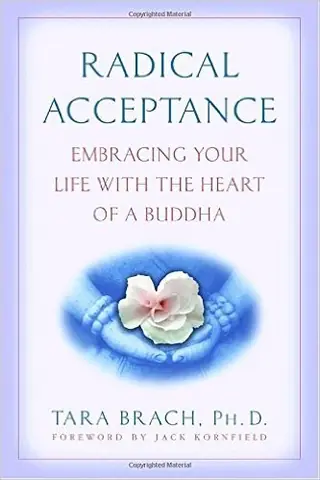
Radical Acceptance summary
by Tara Brach · 2003 · 7 key ideas · 18-minute read
Many of us live in a quiet 'trance of unworthiness'; the way out is radical acceptance — seeing clearly what is happening inside us and holding it with compassion.
Why read it
For anyone with a harsh inner critic or a nagging sense of not being good enough, who wants a gentle, psychologically grounded path to self-acceptance through mindfulness.
Radical Acceptance in brief
Brach starts with a diagnosis: many people live with a persistent feeling that something is wrong with them. She calls this the trance of unworthiness. It drives perfectionism, people-pleasing, overwork and harsh self-judgment, and it cuts us off from others and from our own lives.
Her remedy is radical acceptance: clearly recognising what we are feeling and thinking in this moment, and regarding it with kindness. She describes it as having two wings, like a bird. Mindfulness lets us see what is happening; compassion lets us hold it tenderly. Both are needed.
Practical tools follow. The 'sacred pause' interrupts our habitual rush to fix, flee or attack. 'Unconditional friendliness' means saying yes to our experience rather than fighting it. She also teaches how to work with fear, desire and pain by feeling them in the body rather than getting lost in stories about them.
Brach blends Buddhist teaching with stories from her work as a therapist and her own life, including her struggles with self-doubt. Acceptance, she stresses, is not resignation or passivity; it is the ground from which wise change becomes possible. It is a way of meeting life, not of giving up on it.
The final chapters widen the circle: from self-compassion to compassion for others, including people who have hurt us, and to a deeper sense of our basic goodness. Waking from the trance, she argues, is the essence of spiritual freedom. The book closes on this hopeful note.
The 7 key ideas
1. The trance of unworthiness
'Not enough' is a trance, not a truth.
2. The two wings of acceptance
See it clearly, hold it kindly.
3. The sacred pause
Pause before the habit picks for you.
4. Invite Mara to tea
I see you, Mara. Have some tea.
5. Feel it in the body
Drop the story, feel the feeling.
6. Compassion for yourself
Be the friend you need right now.
7. Widening the circle
Behind every harsh act is a frightened heart.
Read the full guide in Kinquire. Every idea with a real example, a diagram and one thing to try today, plus a quick quiz so it sticks. Free to start.
Read Radical AcceptanceKey takeaways
- Notice when 'not enough' is driving your behaviour.
- Pair clear seeing with kindness whenever you face a difficult feeling.
- Use a sacred pause before habitual reactions.
- Name difficult feelings and welcome them as guests: 'I see you.'
- Feel emotions in the body, not just in your thoughts.
- Offer yourself the kindness you'd give a struggling friend.
Our take
Radical Acceptance is a compassionate, wise book that has helped many readers loosen the grip of shame and self-criticism. Its blend of therapy stories, Buddhist teaching and practical exercises is accessible, and its core ideas align well with research on self-compassion and acceptance-based therapies. Its weaknesses: it can be repetitive and sentimental for some tastes, and the spiritual language of 'basic goodness' and 'awakening' asks readers to accept Buddhist assumptions. 'Acceptance' can be misread as passivity, though Brach explicitly rejects that. People with serious trauma may need professional support alongside the practices.
About Tara Brach
Tara Brach is an American clinical psychologist and meditation teacher who founded the Insight Meditation Community of Washington. She has been one of the best-known teachers of mindfulness in the United States for decades.
If you liked this
- When Things Fall Apart by Pema Chödrön
- The Untethered Soul by Michael A. Singer
- Meditations by Marcus Aurelius
- Letters from a Stoic by Seneca
- The Enchiridion by Epictetus
- The Obstacle Is the Way by Ryan Holiday