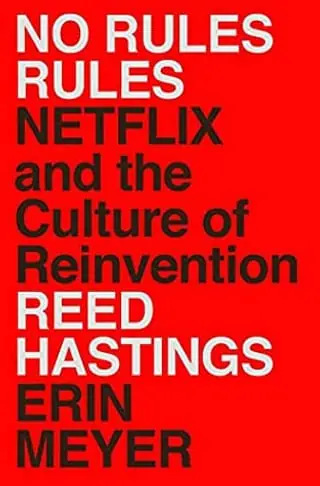
No Rules Rules summary
by Reed Hastings and Erin Meyer · 2020 · 7 key ideas · 18-minute read
Netflix built a culture of ‘freedom and responsibility’ by packing the company with talent, demanding radical candour, and then stripping away the rules most companies rely on.
Why read it
For founders, managers and anyone curious how an unusual culture works from the inside. It's an honest, detailed account of Netflix's practices, with an outsider's view of where they work and where they don't.
No Rules Rules in brief
In 2000, Netflix was a small DVD-by-mail business that offered to sell itself to Blockbuster for $50 million — and was turned down. Hastings uses that moment to frame the book: Netflix survived and overtook giants largely, he argues, because of a culture that let it adapt fast. Erin Meyer, who interviewed many Netflix employees, adds an outside perspective throughout.
The culture is built in steps, which they call ‘dots’ to connect. First, increase talent density by hiring and keeping only highly effective people. Second, increase candour so people give each other honest feedback constantly. Then begin removing controls — like vacation policies and expense approvals — because talented, candid people don't need them.
Once those basics are in place, Netflix goes further: paying top of the market, sharing sensitive information widely, and letting employees make big decisions without approval. To keep talent density high, managers use the ‘keeper test’; to keep candour high, they run feedback rituals.
Finally, leaders manage by giving context rather than control, and the company adapts its culture as it expands across countries with very different norms. The authors are clear that this approach suits creative, fast-moving businesses where innovation matters most — not settings where safety or precision is paramount.
The 7 key ideas
1. Talent density first
Great colleagues are the best perk.
2. Candour, with the 4A rules
Only say about someone what you'd say to their face.
3. Remove controls — start with time off and spending
Fewer rules need better people and clearer context.
4. Pay top of market
One great hire beats three good ones.
5. The keeper test
A team, not a family.
6. Informed captains, farmed dissent
Seek dissent, then decide — and own it.
7. Lead with context, not control
When people get it wrong, ask what you didn't tell them.
Read the full guide in Kinquire. Every idea with a real example, a diagram and one thing to try today, plus a quick quiz so it sticks. Free to start.
Read No Rules RulesKey takeaways
- Raise the quality of your team before you relax its rules.
- Give and receive feedback using the 4A rules.
- Replace one approval process with a clear guiding principle.
- Apply the keeper test — including to yourself.
- Make decision owners seek out dissent before deciding.
- When mistakes happen, ask what context you failed to share.
Our take
No Rules Rules is unusually candid and specific — rare for a CEO's book — and Meyer's outside interviews add balance, including employees' worries. Its practices are bold and many have been widely copied, such as flexible vacation and context-based management. Critics note that Netflix is an exceptional case: high margins, a creative industry and the ability to pay top salaries make its model hard to copy. The keeper test and talent-density focus can feel ruthless, and some ex-employees describe a culture of fear. The authors themselves admit the approach doesn't suit safety-critical work. Read it as a case study, not a template.
About Reed Hastings and Erin Meyer
Reed Hastings co-founded Netflix and led it as CEO for over two decades. Erin Meyer is a professor at the INSEAD business school and author of The Culture Map, a book about cross-cultural business.
If you liked this
- Radical Candor by Kim Scott
- Good to Great by Jim Collins
- Built to Last by Jim Collins and Jerry I. Porras
- The Innovator's Dilemma by Clayton M. Christensen
- Blue Ocean Strategy by W. Chan Kim and Renée Mauborgne
- Good Strategy Bad Strategy by Richard Rumelt