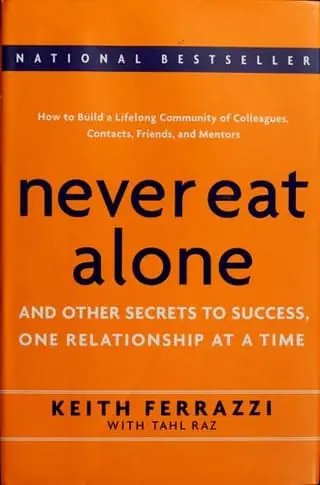
Never Eat Alone summary
by Keith Ferrazzi · 2005 · 7 key ideas · 17-minute read
Success is built on relationships, and the way to build them is through generosity, purpose and constant, genuine contact — long before you need anything.
Why read it
For anyone who finds 'networking' awkward or transactional. Ferrazzi reframes it as building real relationships by helping others, and gives concrete habits for doing it.
Never Eat Alone in brief
Ferrazzi argues that careers and lives are built through relationships, not just talent or hard work. He grew up in a working-class family and noticed early that well-connected people helped each other in ways that opened doors. His conclusion was that anyone can build such connections, but only by doing it generously rather than transactionally.
The book's foundation is a mindset: don't keep score. Relationships grow when you focus on what you can give, not what you can get. Ferrazzi encourages readers to define a clear mission, then build relationships around it — systematically and long before they need help.
He then offers practical habits: do your homework before meeting people, follow up quickly, turn cold calls into warm ones, attend and even host events, and 'ping' your contacts regularly with small gestures. He advises connecting people to each other and filling your calendar with shared meals and activities.
Finally, he looks at becoming someone worth knowing — developing expertise and passions, building a personal brand, and finding mentors while mentoring others. Throughout, he insists that the best networkers aren't schmoozers but generous, curious people who make others' lives better.
The 7 key ideas
1. Don't keep score
Give first. Don't keep score.
2. Know your mission
Know where you're going before you build the bridges.
3. Build it before you need it
Dig the well before you're thirsty.
4. Never eat alone
Every meal is a chance to connect.
5. Ping constantly, follow up always
A contact without follow-up is just a name.
6. Be worth knowing
Have something worth sharing, then share it.
7. Find mentors, be one
Learn from those ahead; lift those behind.
Read the full guide in Kinquire. Every idea with a real example, a diagram and one thing to try today, plus a quick quiz so it sticks. Free to start.
Read Never Eat AloneKey takeaways
- Help someone this week without asking for anything back.
- Write a one-year goal and list five people connected to it.
- Reconnect with three people you haven't spoken to in months.
- Invite one person to share a meal or coffee.
- Follow up within a day of meeting someone.
- Find a mentor and someone you can mentor.
Our take
Never Eat Alone transformed how many people think about networking, replacing schmoozing with generosity, purpose and genuine connection. Its habits — following up, staying in touch, connecting others — are simple and effective. Its weaknesses: the tone can feel relentlessly ambitious and extroverted, and its systematic approach to relationships can seem calculating, which sits uneasily with its message of authenticity. It draws mainly on Ferrazzi's own experience in elite business circles, with little research. Introverts and people with fewer resources may find some advice hard to apply. Its core message — give generously and build relationships before you need them — remains sound.
About Keith Ferrazzi
Keith Ferrazzi is an American business consultant and former chief marketing officer at Deloitte Consulting who founded the consultancy Ferrazzi Greenlight. He wrote the book with journalist Tahl Raz.
If you liked this
- How to Win Friends and Influence People by Dale Carnegie
- Captivate by Vanessa Van Edwards
- Quiet by Susan Cain
- Crucial Conversations by Kerry Patterson, Joseph Grenny, Ron McMillan and Al Switzler
- Nonviolent Communication by Marshall B. Rosenberg
- The 5 Love Languages by Gary Chapman