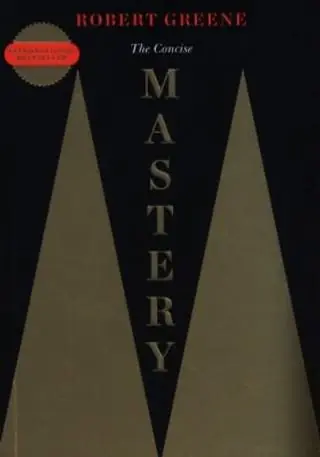
Mastery summary
by Robert Greene · 2012 · 7 key ideas · 18-minute read
Mastery isn't a gift of genius; it's the result of finding your true calling, serving a long and deliberate apprenticeship, learning from mentors and people, and finally thinking creatively and intuitively.
Why read it
For anyone early in a career, changing direction, or wondering how to get truly excellent at something. It turns the lives of famous masters into a step-by-step path anyone can follow.
Mastery in brief
Greene argues that the brilliance we admire in historical masters, from Leonardo da Vinci to Charles Darwin, isn't mysterious talent. It is a form of power and intelligence that anyone can develop by following a particular path. Most people never do, because they drift, chase money or status, or give up during the long middle stretch.
The path has stages. First, discover your Life's Task by reconnecting with the natural inclinations you had as a child. Then serve an ideal apprenticeship: years of observing, acquiring skills and experimenting, valuing learning over money. Find mentors, absorb what they know, and eventually move beyond them.
Along the way you must learn to see people as they really are, not as you wish them to be, so office politics and envy don't derail you. With deep knowledge in place, you enter the creative-active phase, where you experiment, combine ideas and resist the pull toward conventional thinking.
The final stage is mastery: an intuitive feel for your field, built on thousands of hours of practice, in which rational analysis and instinct fuse. Each chapter pairs principles with detailed stories of masters, historical and contemporary, plus strategies for applying them in your own life.
The 7 key ideas
1. Find your Life's Task
Your calling was there before the pressure.
2. Serve a real apprenticeship
Early on, choose the job that teaches, not the one that pays.
3. Move toward the hard parts
Practise where it hurts, not where it flatters.
4. Absorb the mentor's power
Learn from them, then outgrow them.
5. See people as they are
Watch what people do, not what they promise.
6. Awaken the creative mind
Know the rules deeply, then play with them.
7. Fuse intuition and reason
Intuition is experience moving at full speed.
Read the full guide in Kinquire. Every idea with a real example, a diagram and one thing to try today, plus a quick quiz so it sticks. Free to start.
Read MasteryKey takeaways
- Revisit what fascinated you as a child to find your direction.
- Choose roles that teach you the most, especially early on.
- Spend practice time on your weakest skills, with feedback.
- Find a mentor, be useful to them, and eventually move beyond them.
- Judge people by their actions rather than their words.
- Keep questioning conventions even after you've mastered them.
Our take
Mastery offers a compelling, structured roadmap and makes long-term excellence feel achievable rather than reserved for geniuses. Its emphasis on apprenticeship, deliberate practice and valuing learning over money holds up well. Its weaknesses are its method: it relies on selected stories of famous masters, which risks survivorship bias and simplifies messy lives into neat lessons. The 'one Life's Task' idea can feel narrow for people with varied interests, and the advice to accept low pay assumes financial freedom many don't have. Popular claims about fixed hour counts have also been nuanced by later research. Read it as inspiration and a framework, not a guarantee.
About Robert Greene
Robert Greene is an American author best known for The 48 Laws of Power. His books draw heavily on historical biographies to illustrate strategies for power, persuasion and achievement.
If you liked this
- The 48 Laws of Power by Robert Greene
- So Good They Can't Ignore You by Cal Newport
- Range by David Epstein
- Steal Like an Artist by Austin Kleon
- The War of Art by Steven Pressfield
- Big Magic by Elizabeth Gilbert