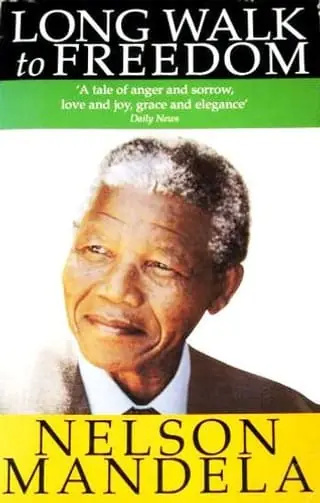
Long Walk to Freedom summary
by Nelson Mandela · 1994 · 8 key ideas · 20-minute read
Nelson Mandela's own account of his journey from a rural Thembu childhood through 27 years in prison to the presidency of a free South Africa.
Why read it
For anyone who wants to understand leadership under pressure, patience in the face of injustice, and how a person can emerge from suffering without bitterness.
Long Walk to Freedom in brief
Mandela was born in 1918 in the village of Mvezo, into a branch of the Thembu royal family. After his father's death he was raised by the regent of the Thembu people, where he watched how a traditional leader listened to his people. He studied at mission schools and at Fort Hare University, then fled an arranged marriage to Johannesburg in 1941.
In Johannesburg he trained as a lawyer, opened South Africa's first black-run law firm with Oliver Tambo, and helped found the ANC Youth League. As the National Party built apartheid after 1948, he led the Defiance Campaign of nonviolent resistance and endured a long treason trial that ended in acquittal.
After police killed protesters at Sharpeville in 1960 and the ANC was banned, Mandela concluded that nonviolence alone had failed. He co-founded the armed wing Umkhonto we Sizwe, went underground, and was captured in 1962. At the Rivonia Trial in 1964 he declared from the dock that he was prepared to die for a free, democratic society, and was sentenced to life imprisonment.
He spent 18 years on Robben Island and further years in other prisons. He studied, organised fellow prisoners, learned Afrikaans and resisted daily humiliation with dignity. In the mid-1980s he began secret talks with the government on his own initiative.
Released in February 1990 after 27 years, he negotiated an end to apartheid amid violence and setbacks. The book ends with his inauguration as president in 1994 and his conviction that true freedom means respecting and enhancing the freedom of others.
The 8 key ideas
1. Lead from behind
Speak last, listen first.
2. Tactics, not dogma
Hold the goal tightly and the tactics loosely.
3. Prison as a university
They can lock the door, not the mind.
4. Learn your opponent's language
Speak to their heart in their own language.
5. Courage is mastering fear
Feel the fear; don't let it hold the pen.
6. Sometimes go ahead of the flock
Listen from behind; step in front when history calls.
7. The price of the cause
Every great cause has a home that waits.
8. Free the oppressor too
Freedom that excludes anyone is just a new cage.
Read the full guide in Kinquire. Every idea with a real example, a diagram and one thing to try today, plus a quick quiz so it sticks. Free to start.
Read Long Walk to FreedomKey takeaways
- In meetings, invite every voice and speak last.
- Keep your goal fixed but be willing to change your methods.
- Use difficult periods to study and grow.
- Learn the language and history of people you disagree with.
- Act calmly despite fear — the feeling follows the action.
- Seek reconciliation that includes former opponents.
Our take
Long Walk to Freedom is a moving, clear-eyed account by one of the twentieth century's great leaders, and its lessons on patience, dignity and negotiation are timeless. Begun secretly on Robben Island and completed with writer Richard Stengel, it was also written while Mandela was an active politician, so it is careful and sometimes guarded. It says relatively little about internal ANC conflicts, the violence of the armed struggle or the controversies around Winnie Mandela. Later biographies and his published prison letters add nuance.
About Nelson Mandela
Nelson Mandela (1918–2013) was a lawyer, anti-apartheid leader and political prisoner who became South Africa's first democratically elected president in 1994. He shared the 1993 Nobel Peace Prize with F. W. de Klerk.
If you liked this
- Man's Search for Meaning by Viktor E. Frankl
- Sapiens by Yuval Noah Harari
- Guns, Germs, and Steel by Jared Diamond
- The Silk Roads by Peter Frankopan
- SPQR by Mary Beard
- The Rise and Fall of the Third Reich by William L. Shirer