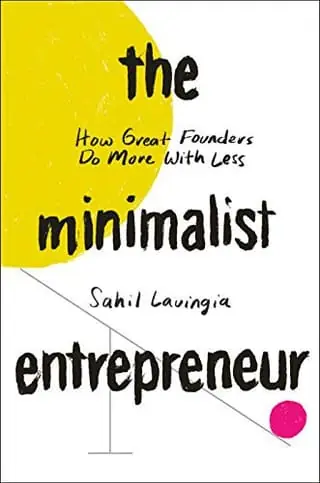
The Minimalist Entrepreneur summary
by Sahil Lavingia · 2021 · 7 key ideas · 16-minute read
How to build a profitable, sustainable business by starting with a community you belong to, building as little as possible, and growing only as fast as you need to.
Why read it
For people who want to start something real without raising venture capital or betting everything. Lavingia offers a calm, step-by-step path from first idea to first hundred customers and beyond.
The Minimalist Entrepreneur in brief
Lavingia founded Gumroad in 2011 and raised millions from investors to chase huge growth. When that growth did not arrive, the company nearly ran out of money, and he had to let most of the team go. What survived was a small, profitable business that served its customers well, and he realised that might have been the better goal all along.
The book turns that lesson into a method. Start with a community you already belong to, so you understand its problems. Solve one of those problems manually before building any product. Then build as little software as possible, and sell it to your first hundred customers one by one.
From there, grow by being yourself in public: teaching, sharing and helping your community rather than buying ads. Aim for profitability early, because profit gives you freedom to make your own decisions and stay in the game.
Finally, grow yourself as much as the business, and build a company you would actually want to work in. Lavingia calls this minimalist entrepreneurship: doing more with less, and putting sustainability ahead of size.
The 7 key ideas
1. Start with a community you belong to
Find your people first, then their problem.
2. Do it manually before you build
Process first. Product later.
3. Build as little as possible
If customers don't ask for it, don't build it yet.
4. Sell to your first hundred customers
Your first hundred customers are your best teachers.
5. Market by being you
Teach what you know; customers will find you.
6. Profit is freedom
Profit buys you time; time buys you everything else.
7. Build the house you want to live in
Your company is a home. Design one worth living in.
Read the full guide in Kinquire. Every idea with a real example, a diagram and one thing to try today, plus a quick quiz so it sticks. Free to start.
Read The Minimalist EntrepreneurKey takeaways
- Start in a community you belong to and listen for repeated problems.
- Solve the problem by hand for a few people before building a product.
- Launch with the smallest thing that solves the core problem.
- Find your first hundred customers personally, starting with people you know.
- Market by teaching and sharing what you know.
- Make profitability an early goal, so you stay free.
Our take
The book is clear, kind and practical, and its message, that you can build something sustainable without venture capital, is a useful antidote to startup hype. Lavingia is honest about his own failures, which makes the advice credible. Its limits are that it leans heavily on software and digital products, so readers with physical products or local services will need to adapt some steps. The examples come mostly from the creator economy, and the path it describes is slower than the book's calm tone can make it feel. As a starting framework, though, it is one of the most accessible on the subject.
About Sahil Lavingia
Sahil Lavingia was an early employee at Pinterest and founded Gumroad, a platform that helps creators sell digital products, in 2011.
If you liked this
- Anything You Want by Derek Sivers
- The Lean Startup by Eric Ries
- Company of One by Paul Jarvis
- Show Your Work! by Austin Kleon
- Zero to One by Peter Thiel with Blake Masters
- The Hard Thing About Hard Things by Ben Horowitz