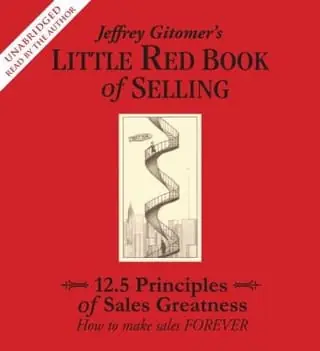
The Little Red Book of Selling summary
by Jeffrey Gitomer · 2004 · 7 key ideas · 17-minute read
People don't like to be sold, but they love to buy — so build a reputation, a network and real value that make customers want to buy from you, guided by 12.5 blunt principles.
Why read it
For salespeople, freelancers and small-business owners who want a short, energetic set of principles rather than a system. It is punchy, opinionated and quick to apply.
The Little Red Book of Selling in brief
Gitomer's core message is in one line: people don't like to be sold, but they love to buy. Instead of studying how to sell, he says, study why people buy — and create an atmosphere in which they want to. That means focusing on the customer's motives, building trust and providing value, rather than pushing a product.
He organises the book around 12.5 principles of sales greatness. They range from personal responsibility (kick your own backside into action) and preparation, to building a personal brand, networking, and delivering value and relationships instead of competing on price. Each is short enough to read in a few minutes and act on the same day.
Other principles concern the sales conversation itself: reach the real decision-maker, engage prospects with questions about them, use humour and creativity to stand out, reduce the buyer's risk, and let customers' testimonials do your bragging. He also urges salespeople to keep their ‘antennas up’ for opportunities everywhere.
The final half-principle is to resign as ‘general manager of the universe’: stop worrying about things you can't control and focus on your own actions. Throughout, Gitomer stresses that attitude is a choice and that success in selling comes from daily habits of learning, giving value and building relationships.
The 7 key ideas
1. People love to buy
Study why they buy, not how to sell.
2. Kick your own butt
Nobody can motivate you like you can.
3. Your reputation is your brand
Be known for something before you ask for anything.
4. Value and relationships beat price
Compete on value, or you'll compete on price.
5. Get to the real decision-maker
Sell to the person who can sign.
6. Make them laugh, make them remember
Be the one they remember — and smile about.
7. Let others do your bragging
Their praise is proof; yours is noise.
Read the full guide in Kinquire. Every idea with a real example, a diagram and one thing to try today, plus a quick quiz so it sticks. Free to start.
Read The Little Red Book of SellingKey takeaways
- Ask customers why they bought, and design your approach around those reasons.
- Spend the first minutes of each day learning about your customers' world.
- Share something genuinely useful publicly each week to build your reputation.
- Offer ways to reduce risk — trials, references, guarantees.
- Find and meet the real decision-maker early.
- Collect customer testimonials, ideally on video.
Our take
The Little Red Book of Selling is short, punchy and motivating, and its core message — focus on why customers buy, build value and reputation — has aged well in an era of online research and reviews. Its style is brash and repetitive, and some readers find the design and slogans gimmicky. It offers principles rather than a step-by-step method, and its claims rest on the author's experience rather than research. Use it as a quick shot of perspective and motivation, alongside more structured books for technique.
About Jeffrey Gitomer
Jeffrey Gitomer is an American sales trainer, speaker and author of many books on selling, including The Sales Bible. The Little Red Book of Selling is his best-known title.
If you liked this
- The Psychology of Selling by Brian Tracy
- Fanatical Prospecting by Jeb Blount
- To Sell Is Human by Daniel H. Pink
- How to Win Friends and Influence People by Dale Carnegie
- Crucial Conversations by Kerry Patterson, Joseph Grenny, Ron McMillan and Al Switzler
- Nonviolent Communication by Marshall B. Rosenberg