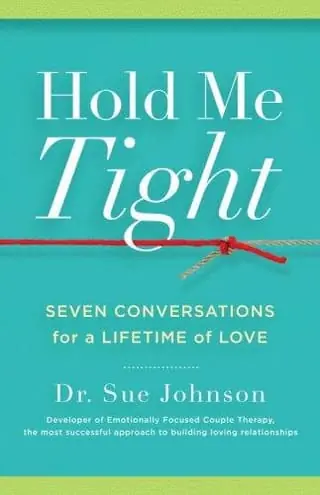
Hold Me Tight summary
by Sue Johnson · 2008 · 7 key ideas · 18-minute read
Most couple fights are really protests about disconnection, so the cure is not better arguing but conversations that rebuild a secure emotional bond.
Why read it
For couples stuck in the same fight on repeat, and for anyone who wants to understand what is really happening underneath relationship conflict.
Hold Me Tight in brief
Johnson argues that adult romantic love is an attachment bond, like the bond between a child and parent. We are wired to need a few people we can reach for and count on. When that connection feels threatened, we experience something close to panic, and that panic, not the topic on the surface, drives most of our fights.
Her central question is simple: 'Are you there for me?' Partners need to feel the other is accessible, responsive and emotionally engaged. When they doubt it, they fall into what she calls Demon Dialogues: blaming each other, chasing and withdrawing, or both shutting down. These patterns become the real enemy, not the partner.
The book guides couples through seven conversations. They learn to recognise their demon dialogues, find the 'raw spots' that set them off, and revisit painful moments calmly. The heart of the process is the 'Hold Me Tight' conversation, where partners reach for each other with their softer fears and needs, and are met.
The final conversations address forgiving deep injuries, bonding through touch and sex, and keeping love alive over time by protecting rituals of connection. Johnson's message is hopeful: love isn't a mystery, and with the right understanding most couples can rebuild a secure, lasting bond.
The 7 key ideas
1. Love is an attachment bond
Under every fight: are you there for me?
2. A.R.E. you there for me?
Can I reach you? Will you respond? Do you care?
3. Name the Demon Dialogues
The dance is the enemy, not your partner.
4. The Protest Polka
Anger shouts; fear whispers. Listen for the whisper.
5. Find the raw spots
Big reaction, old wound.
6. The Hold Me Tight conversation
Reach and respond: that's the whole bond.
7. Healing attachment injuries
Some wounds need presence, not just an apology.
Read the full guide in Kinquire. Every idea with a real example, a diagram and one thing to try today, plus a quick quiz so it sticks. Free to start.
Read Hold Me TightKey takeaways
- Treat fights as protests about connection, not just disagreements.
- Ask yourself how accessible, responsive and engaged you are.
- Name your recurring fight pattern together.
- Share the fear underneath your anger or withdrawal.
- Learn each other's raw spots and handle them with care.
- Repair old injuries with presence and ownership, not just apologies.
Our take
Hold Me Tight offers a deeply humane explanation for why couples fight and a hopeful, structured path back to closeness, grounded in attachment research and a well-studied therapy. Its focus on softer emotions under hard behaviour is genuinely transformative for many readers. Limits: some couples will find the conversations hard to do alone without a therapist; much of the supporting research comes from Johnson and colleagues; and the framework is less suited to relationships with abuse or severe power imbalance, which need different help. As a guide to the emotional heart of conflict, it remains one of the best.
About Sue Johnson
Sue Johnson was a clinical psychologist and the main developer of Emotionally Focused Therapy (EFT) for couples. This book translates that therapy into seven conversations couples can work through themselves.
If you liked this
- Attached by Amir Levine and Rachel Heller
- The Seven Principles for Making Marriage Work by John M. Gottman and Nan Silver
- Nonviolent Communication by Marshall B. Rosenberg
- The 5 Love Languages by Gary Chapman
- How to Win Friends and Influence People by Dale Carnegie
- Crucial Conversations by Kerry Patterson, Joseph Grenny, Ron McMillan and Al Switzler